Throwback: What Was Hiding in Plain Sight
For decades, one mystery at Love Library defied every attempt to explain it—even by those who knew San Diego State University best.
By Seth Mallios and Zoe Zarling
April 20, 2026
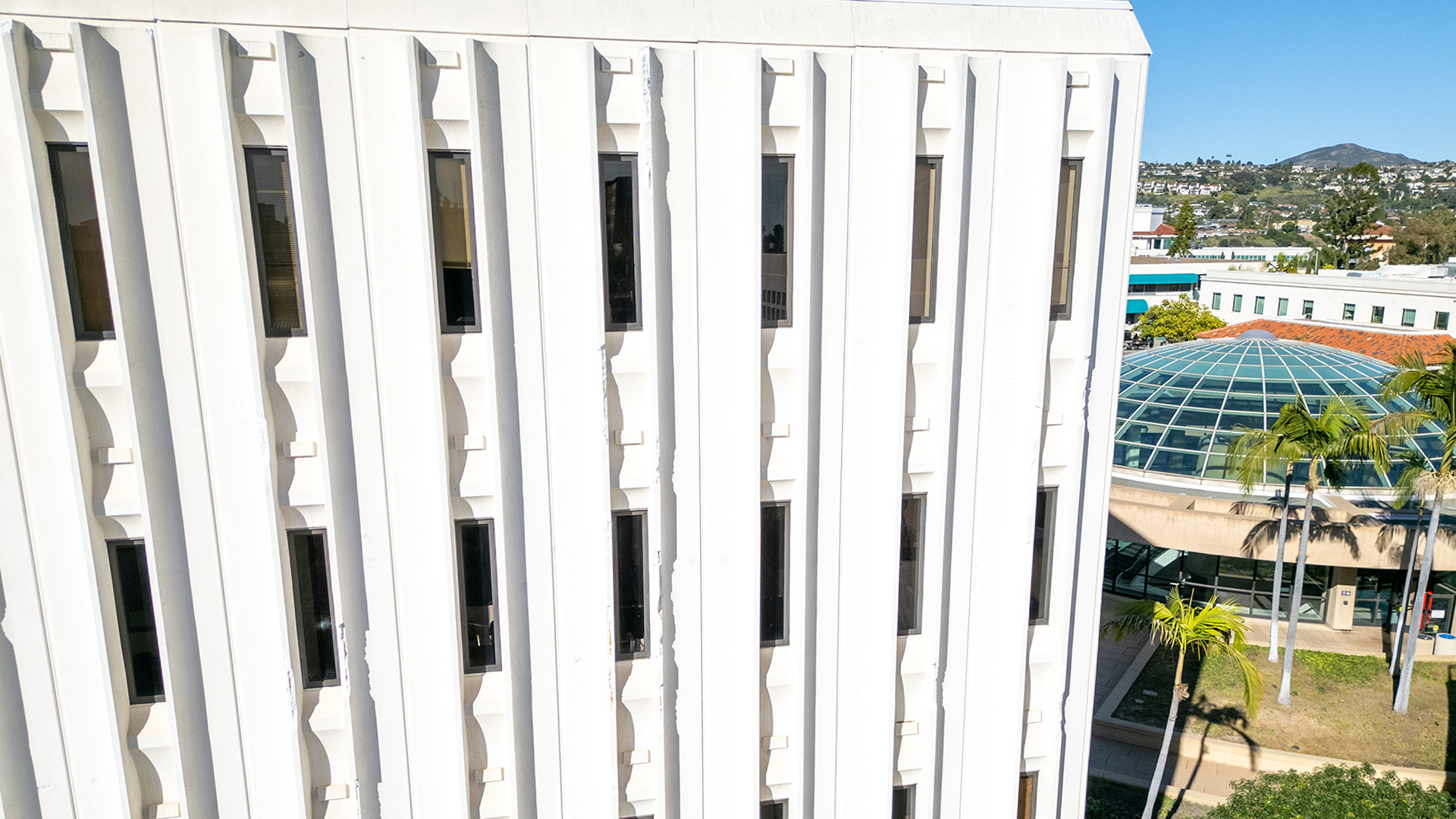
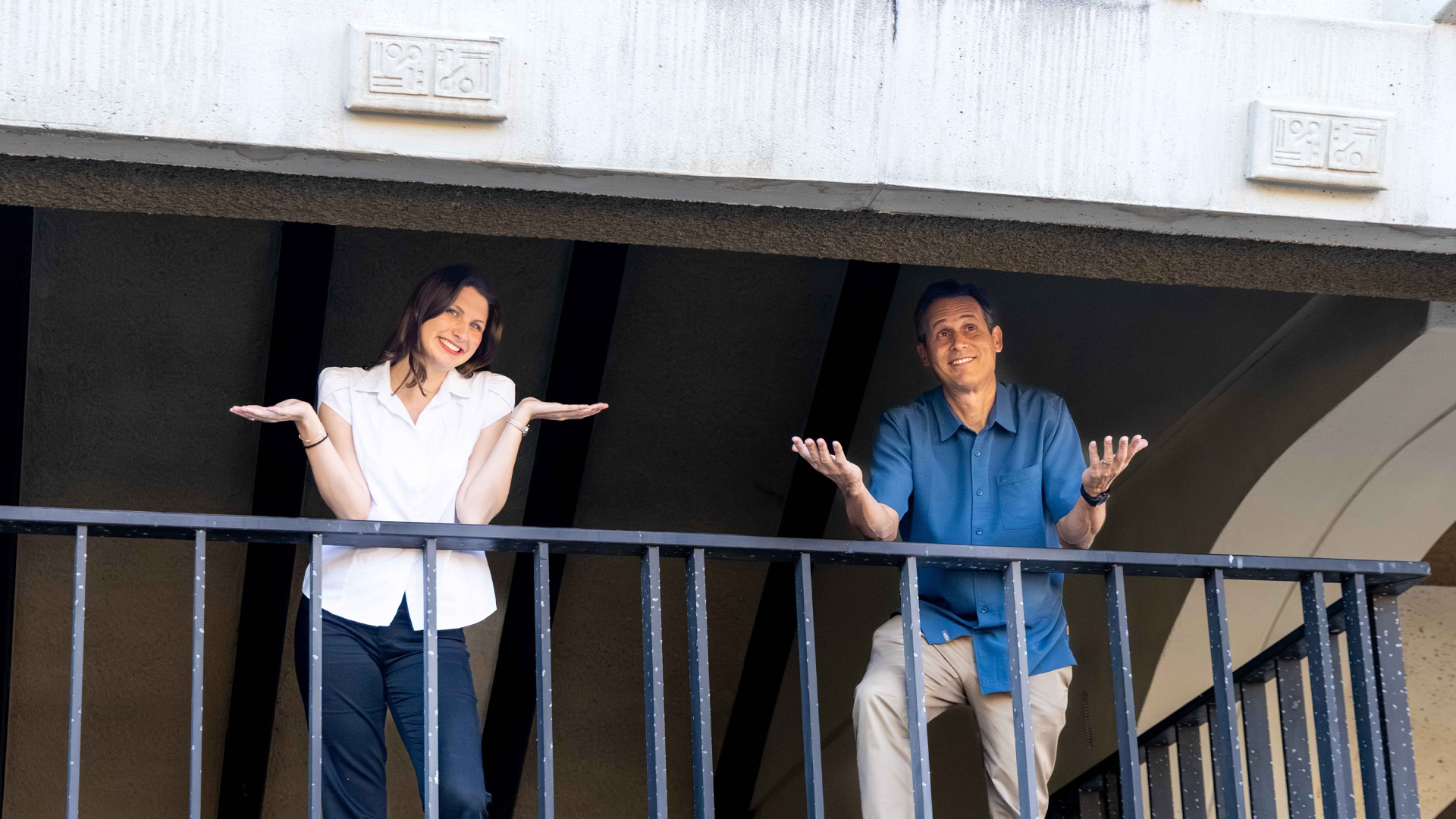
Seth Mallios, Kit and Karen Sickels Endowed Chair in University Heritage and Community Engagement: In my 25 years at San Diego State University, we’ve found a wild range of hidden campus treasures—everything from lost Depression-era murals to a fully stocked Cold War bomb shelter—but there was one mystery that I couldn’t seem to crack, no matter how hard I tried. Namely, what was the story behind those odd symbols on the exterior of Love Library? There are 672 of them, spaced at even intervals on each side of the building. I found no explanation in SDSU’s Special Collections University Archives. I quizzed six university presidents—and even people with the longest tenure on campus were stumped.
To make matters worse, virtually no one even knew what I was talking about: “What symbols?” was the regular response. So perplexed was I that I ranked the symbols No. 1 on my list of “Where in the University?” on the last page of the history book Hail Montezuma!—and then I moved on to other campus enigmas.
Zoe Zarling, a journalism and media studies junior: Attending SDSU had long been a dream of mine. Not all dreams come easy though, and I was not admitted directly out of high school. I took the detour in stride, attended community college for two years, and then transferred to San Diego State University.
During this time, I regularly visited the campus, and on one of those trips in 2024, I found myself outside Love Library, admiring the building. That’s when I noticed the symbols. I took pictures that day, but my quest to figure them out would have to wait until the following fall, when my SDSU journalism class assignment on feature writing gave me the opportunity to research them.
I began in the university library, but the information desk, the night manager and the archivists were all unfamiliar with the markers. The only listing of the symbols online was a brief mention of their mysteriousness on a website called Hail Montezuma! by Dr. Seth Mallios, and I reached out to him immediately. After an insightful chat with him, I was invigorated to continue my search for answers. I soon found myself digging through unprocessed files in SCUA. There, I came across a photograph of the library, fully built and operational, but without the symbols. The markers had been added at a later date, but why?

SM: Truth be told, I had given up on the symbols, but Zoe’s curiosity and dedication rekindled my interest. Great students have a way of re-energizing difficult projects. We met and came up with a research design for her that was focused on isolating exactly when the glyphs were affixed to the structure. I was certain about two things: 1) Fullerton State’s Pollack Library was a similar and contemporaneous building with no external symbols, and 2) the Love Library markings were in place when I started at SDSU in 2001. In searching the school catalogs, yearbooks and recently added photographs in SCUA, would Zoe be able to narrow down the window of time when they were affixed to the building?
ZZ: After scrutinizing everything related to Love Library, I pinpointed when the symbols were added: the summer of 1996. Several images from March of that year showed that they were not there, and a photo taken on September 19, 1996, revealed that the markers were all on the building the following fall. But there were still no leads as to what they were and why they were added.
SM: While Zoe did a deep dive into our archives, I embarked on a new round of questioning with long-term San Diego State employees. When I emailed SDSU’s inaugural provost, Nancy Marlin—who was on Easter Island at the time of my correspondence—she immediately answered, encouraging me to contact former SDSU architect Tony Fulton, who retired in 2009.
Fulton was also quick to respond. He explained that in the mid-1990s, soon after the 1994 Northridge earthquake, the university upgraded Love Library for seismic safety. Structural engineers installed numerous anchor plates with bolts that protruded through the building. If left exposed, they would have been “eye-catchingly ugly,” Fulton said. “Structural engineers are not architects, so I stepped in with an idea,” he continued. “Let’s use some square covers to hide the bolts. I tried to research some Aztec symbols [pre-internet] and came up with several which we used. So there you have it. Totally my idea!”
ZZ: I was bursting with excitement over my findings, and I needed to tell Dr. Mallios. We scheduled a meeting, and the playful smile he had when I walked in the door informed me that he had big news too. He insisted I go first, and I told him that I finally knew the exact timing. He then told me about his conversation with Tony Fulton. Laughter filled the room as the 30-year mystery was finally solved. But we still have no answer as to how so many people walk by Love Library every day and have never registered that these strange symbols exist. They are truly hidden in plain sight!
See more “Where in the University?” campus mysteries.