Construction begins on cutting-edge water lab at SDSU Mission Valley
The One Water Laboratory will promote education, outreach and training, furthering research on watersheds and water technologies.
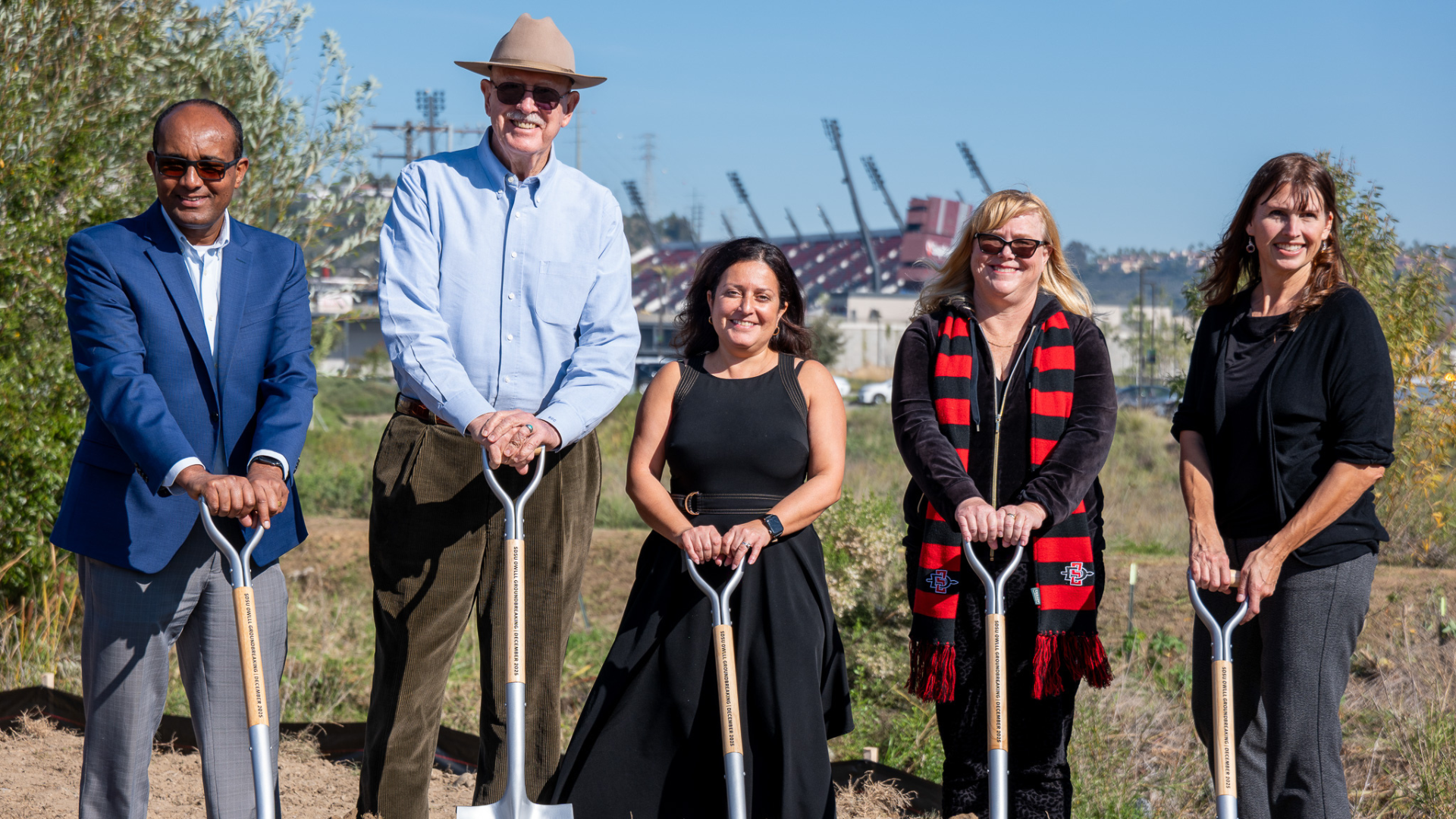
San Diego State University officially broke ground on the One Water Laboratory (OWL), a pioneering facility dedicated to research, education and community outreach focused on sustainable water management.
Situated adjacent to the river park at SDSU Mission Valley, the OWL will be an active research and training facility, with construction to be completed later next year. Once operational, SDSU students will have the opportunity to gain real-world experience, deepening their understanding of watershed science and hydrological systems.
The project is made possible by $2.6 million in grant funding from the San Diego River Conservancy, an independent, non-regulatory state agency established to preserve, restore and enhance the San Diego River Area.
The 480-square-foot modular building and outdoor space will make use of the bioretention basins located throughout SDSU Mission Valley’s river park. These basins were designed to actively capture and filter stormwater runoff from the surrounding landscape. This natural filtration process cleanses the water before it flows into the San Diego River and makes its way to the Pacific Ocean via Mission Bay.
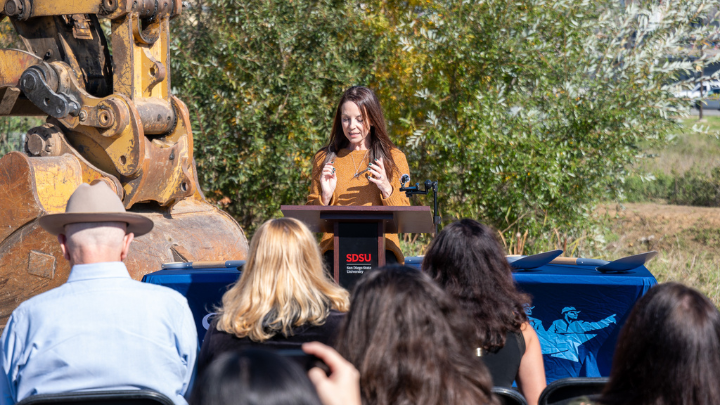
“Water is central to life, to public health, and to the future of our region,” said Hala Madanat, Vice President of SDSU’s Division for Research and Innovation. “The challenges we face with drought, flooding, water quality and sustainable water management are complex, but they are not insurmountable. Addressing these challenges requires not only scientific knowledge, but also hands-on experience with the technologies and systems that are shaping the future of water science.”
Founded on the ‘One Water’ concept, which holds that every drop of water is equally valuable, the lab’s mission recognizes surface water, stormwater and wastewater as essential, interconnected resources for mitigating water scarcity, strengthening climate resilience and sustaining critical ecosystems.
“This lab is strategically located, as the river park is enclosed by the San Diego River and Murphy Canyon Creek, and nearby is a biofiltration basin where native plants stabilize slopes and clean stormwater,” said Natalie Mladenov, SDSU’s William E. Leonhard, Jr. endowed chair and professor of environmental engineering and principal investigator of the project. “These features provide tremendous opportunities for research and innovation, giving us direct access to a living watershed, an urban river system that is characteristic of San Diego and the region.”
The laboratory aims to foster greater connections between higher education’s knowledge base and local San Diego communities to highlight the critical ecosystem services and benefits that watersheds provide. Beyond SDSU’s academic community, the lab will host educational opportunities for local K-12 schools, community members and regional partners.
The new initiative comes with a call to action in communicating the urgency of updating and innovating the region’s water infrastructure. This push is critical to protecting human health, preventing pollution of waterways, diversifying water sources and guarding against extreme events, such as wildfires and droughts.
“The research and training conducted at the One Water Laboratory are intended to impact far beyond SDSU and San Diego,” said Madanat. “We will provide crucial solutions and create a skilled workforce to address the complex water challenges facing the region.”