The Next Step helps graduate students build workforce-ready skills
The program offers no-cost online career training skills to nearly 55,000 graduate students across the Cal State University system
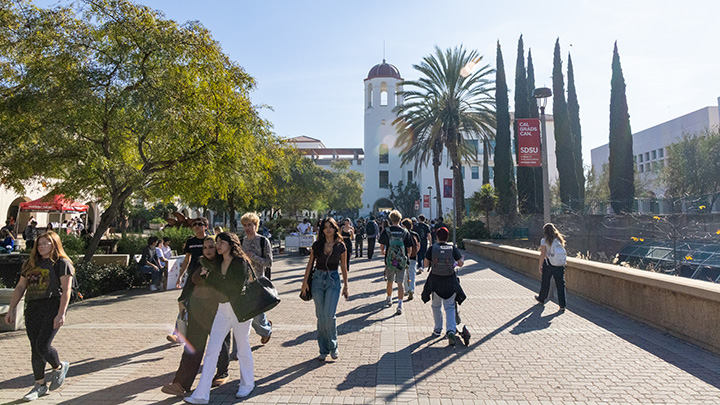
San Diego State University is at the forefront of a California State University (CSU) initiative to help graduate students translate academic achievement into career-ready skills.
Through The Next Step: CSU Graduate Career Readiness Training, more than 6,200 SDSU graduate students are among the nearly 55,000 doctoral, master’s and teaching-credential students across the CSU system who can now access the cost-free course that helps develop and showcase essential workplace competencies.
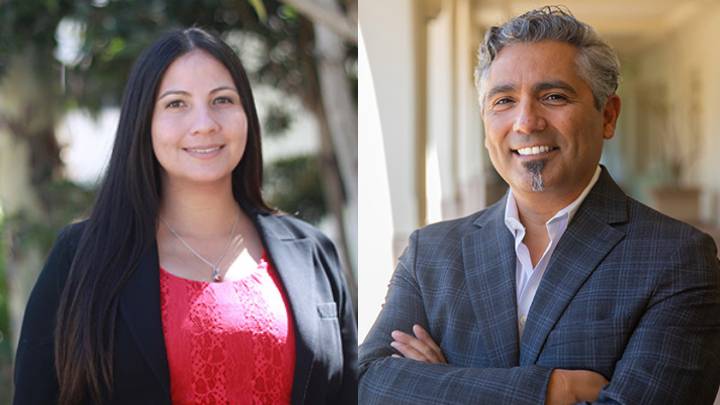
“While earning an advanced degree remains our central goal, career readiness is a core component of graduate education,” said Tracy Love, dean of SDSU’s College of Graduate Studies.
Love is among eight CSU graduate deans who co-developed the initiative. In 2023, the group secured support from the Chancellor’s office along with a $30,000 award for Innovation in Promoting Success in Graduate Education from the Educational Testing Service and Council of Graduate Schools.
The Next Step program is grounded in competencies identified by the National Association of Colleges and Employers (NACE), whose framework is widely recognized by employers. The program focuses on eight core areas: Career and self-development, communication, critical thinking, equity and inclusion, leadership, professionalism, teamwork and technology.
Each participating CSU campus led the development of one competency. SDSU selected communication.
“Regardless of your career path or research focus, graduate students must be able to communicate clearly with colleagues and the public and engage in productive conversations that advance their work,” Love said.
Heather Canary, professor and director of the SDSU School of Communication, designed the curriculum. The module includes instruction in communication competence, intercultural communication, nonverbal cues, persuasion and presentation skills.
“We focused on communication because employers consistently identify it as one of the most important skills they seek,” said Canary. Unless you’re a communication major, it’s not typically required coursework in many graduate programs.”
Workplace barriers
Canary noted in today’s era of expanding social media use and artificial intelligence tools, many individuals struggle with direct face-to-face communication, which she said can be a barrier in the workplace.
The communication module also emphasizes reflection and pragmatic application. Students examine how their academic work and research demonstrate employer-valued skills, and they can practice articulating those skills in resumes, interviews and mock professional conversations.
Students can complete any or all modules asynchronously, at their own pace. Each module takes approximately one hour to complete, with students earning a badge for each completed module. Students may choose topics that align with their immediate career goals or complete all eight modules to earn a CSU microcredential in career readiness. The badges and microcredential can be shared on networking platforms such as LinkedIn as a verifiable record of professional competencies.
The effort was also shaped by SDSU’s Instructional Technology Services (ITS), with instructional designer Nava Amnoona designing the module’s structure to align with systemwide delivery and learning outcomes.
SDSU graduate student Danielle Gonzales (‘25) worked with Canary on the communication curriculum module. She credits the training with helping her secure a pharmaceutical sales representative position immediately after graduation.
“Being able to communicate complex medical and scientific information clearly and efficiently is essential in every part of my job,” Gonzales said.
“In my experience in applying for positions, communication skills are highly valued and sought after by employers,” she said.
In alignment with SDSU’s broader commitment to preparing students for meaningful careers and leadership roles, faculty members and graduate advisors are encouraged to explore The Next Step courses to better understand the competencies students are developing.
“Our mission is to promote excellence in the graduate programs, advocate for long-term student success and foster a diverse, inclusive environment that prepares the next generation of scholars, researchers and practitioners,” Love said.