Pilot study explores environmental factors and cancer risk for farmworkers in Imperial Valley
Curebound awarded grants to five SDSU faculty in collaboration with community partners to advance cancer care, through research on health care disparities.

Agriculture drives the economy of California’s Imperial Valley and sustains food systems far beyond the region. Yet the long-term health effects of environmental exposure in agricultural settings, particularly related to cancer risk, remain largely unexplored.
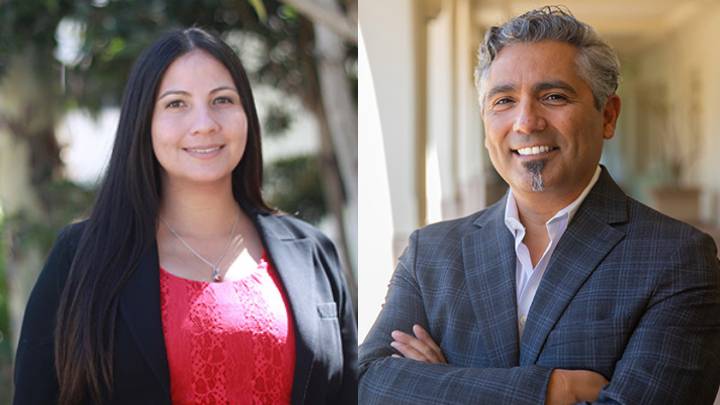
San Diego State University Imperial Valley assistant professors of environmental health, Nicolas Lopez-Galvez and Linda Lara-Jacobo, in collaboration with UC San Diego assistant professor Joshua Demb, are launching an exploratory, promotora-led pilot study to help address that gap.
Curebound, a San Diego-based 501(c)(3) philanthropic organization that fundraises for and invests in innovative cancer research, awarded five SDSU faculty members three equity-focused grants to focus on advancing cancer care. This research will examine potential associations between environmental pollutants in agricultural settings and gastrointestinal cancer risk in Imperial Valley.
Imperial Valley sits at the intersection of intensive agriculture, environmental exposure but limited access to preventive health care. While cancer disparities have been documented broadly, there is a lack of data related to gastrointestinal and colon cancers in agricultural regions. That absence of data, combined with concerns raised through earlier community-engaged breast cancer research, helped shape the focus of this study.
“Community conversations consistently pointed to gastrointestinal cancers as a concern, but one with little supporting data,” said Lopez-Galvez, SDSU Imperial Valley assistant professor of environmental health. “That knowledge gap is where this project begins.”
The interdisciplinary study is grounded in community partnership with Líderes Campesinas, a women-led organization that advocates for safer working conditions and healthier environments for farmworkers across California.
Community trust is central to the study’s design. This study is promotora-led, meaning it is guided by trusted, trained community leaders who provide advocacy, culturally responsive health education and act as liaisons connecting people to vital health and social services. Researchers intentionally prioritized collaboration with partners who live and work in the region, creating opportunities for shared learning while expanding training and education locally.
“Our students have the technical skills and knowledge. They are eager,” said Lopez-Galvez. “What can be lacking at times are opportunities to apply them locally.”
“This project brings those opportunities to Imperial Valley, allowing students to gain hands-on experience in research that matters to their own communities.”
Community outreach
Researchers also emphasize a citizen science approach that prioritizes community participation, training and shared understanding.
“At its core, this work is about farmworkers, the community,” said Lara-Jacobo, SDSU Imperial Valley assistant professor of environmental health. “Thanks to them we have food on our tables. Farmworkers sustain our food system. Understanding potential health risks is a necessary first step toward protecting their well-being. My hope is we can create a new pipeline to diagnose faster and have earlier detection for farmworkers.”
Environmental pollutants in agricultural settings can be difficult to observe but may have long-term health implications. Repeated exposure to pesticides, dust and other environmental factors has been hypothesized to affect gastrointestinal health over time.
These potential links have been historically understudied due to limited surveillance data, gaps in hospital reporting and the underrepresentation of farmworker communities in research. In addition, there are also significant barriers to access to health services such as screening for early detection.
“Cancer disparities start with primary prevention and early detection. If we’re not able to diagnose everyone at the same stage of disease, whether that’s pre-cancerous or cancerous, then you already have inequities baked in that are only going to intensify the farther along the cancer continuum you get, from diagnosis, to treatment, to survivorship,” said Corinne McDaniels-Davidson, SDSU associate professor of public health, fellow recipient of the Curebound equity grant for a research project on addressing cancer disparities through pre-diagnostic care using SEER-Medicare analysis.
“If we can solve some of the earlier problems, then we are solving a lot of later problems too.”
Curebound awarded two additional SDSU affiliated research projects in collaboration with UC San Diego, totaling a $750,000 investment. All three projects focus on advancing cancer care in medically underrepresented and underserved communities, with the goal of improving access, outcomes and equity in prostate, breast, and colorectal cancer.
“I am so grateful that Curebound recognized that this was an area that needed investment and that they were willing to invest in health equity and projects that really can help to address cancer disparities,” said McDaniels-Davidson.